

And so it begins.
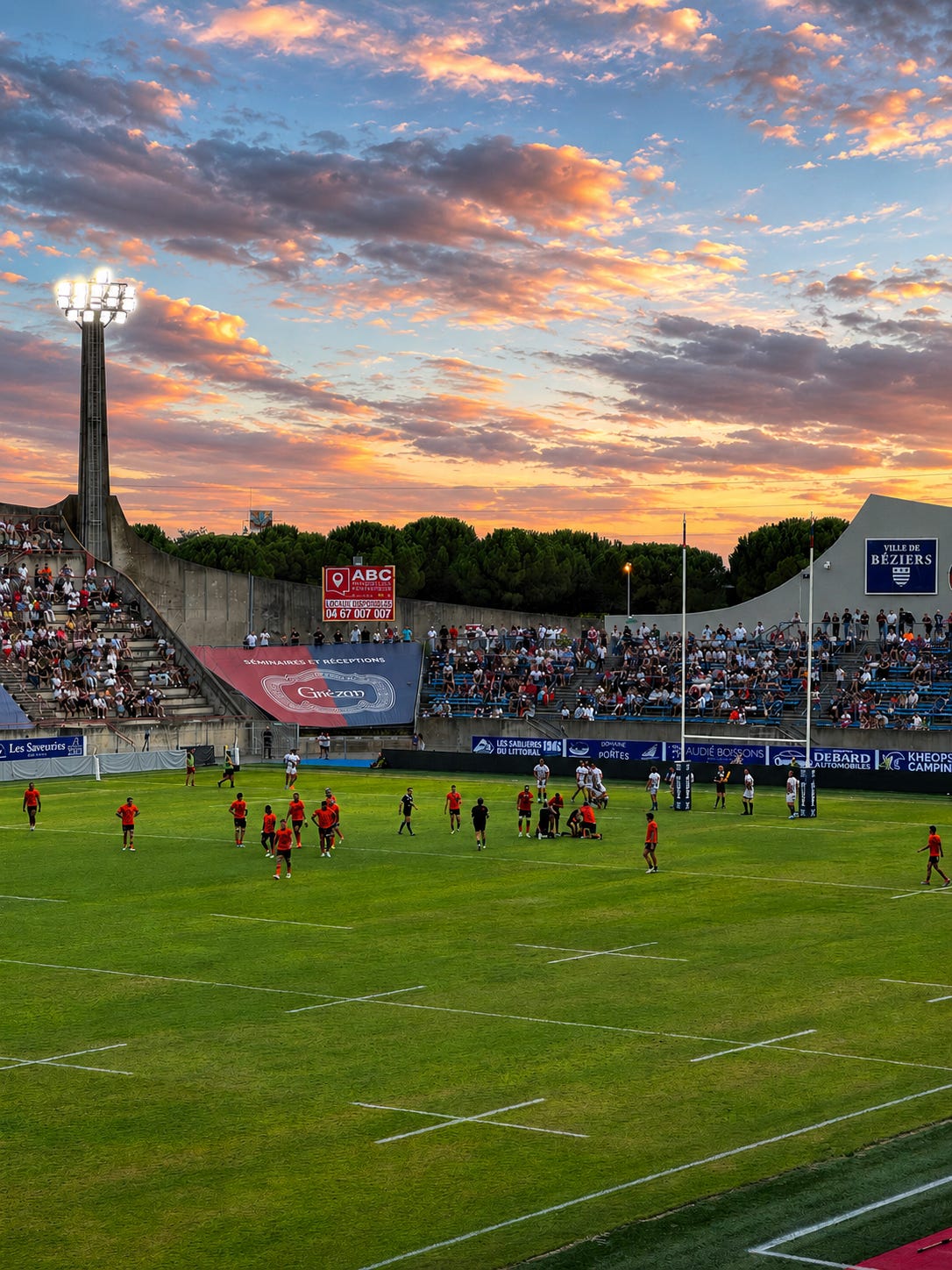
Tonight I’m sitting in the stands in Béziers, watching ASBH take on Narbonne in the traditional pre-season derby that helps kick off the Béziers Feria.
Technically, it’s a friendly.
Anyone familiar with the rivalry between Béziers and Narbonne might question how much the word friendly really applies.
But there’s something else beginning tonight too.
A new season. A new team. New combinations. New expectations.
Béziers go into this season with an almost completely rebuilt squad. There are new faces everywhere. Individually, many of them will be talented rugby players. They know how to pass, tackle, kick, run lines and read a game.
But knowing how to play rugby isn’t the same as knowing how to play together.
That takes time.
And watching them tonight got me thinking about how we build teams — and something I learned about leadership many years ago.
Leadership begins before everything is ready
We sometimes imagine leadership beginning at the point when someone is ready for it.
When they receive the promotion.
When they’re given responsibility.
When somebody hands them the captain’s armband.
But leadership usually starts much earlier.
It starts in childhood. On sports fields. In classrooms. In friendships. In families. In those moments when somebody chooses to step forward, encourage someone else, take responsibility, challenge something that doesn’t seem right, or help a group move forward.
Most of us probably began learning how to lead long before we knew that was what we were doing.
And none of us began as the finished article.
I certainly didn’t.
“I’ll staff to my weaknesses”
Many years ago, I approached my father-in-law, Dieter, about eventually succeeding him at Agronomix.
Dieter had founded the company and had spent decades working in plant breeding. Agronomix built specialist software for plant breeders and variety testers around the world.
I wasn’t a plant breeder.
Unsurprisingly, that concerned him.
How could someone who wasn’t a plant breeder eventually lead a company so deeply rooted in plant breeding?
My answer was fairly simple:
“I’ll staff to my weaknesses.”
I knew I couldn’t replace Dieter by becoming Dieter.
Nor did I need to pretend that I possessed knowledge and expertise that I didn’t.
What I could do was understand the strengths I brought, be honest about the strengths I didn’t have, and build a team containing them.
Looking back, I think that conversation shaped more of my leadership philosophy than I realised at the time.
Because that is how you build a team.
Fifteen fly-halves wouldn’t make a rugby team
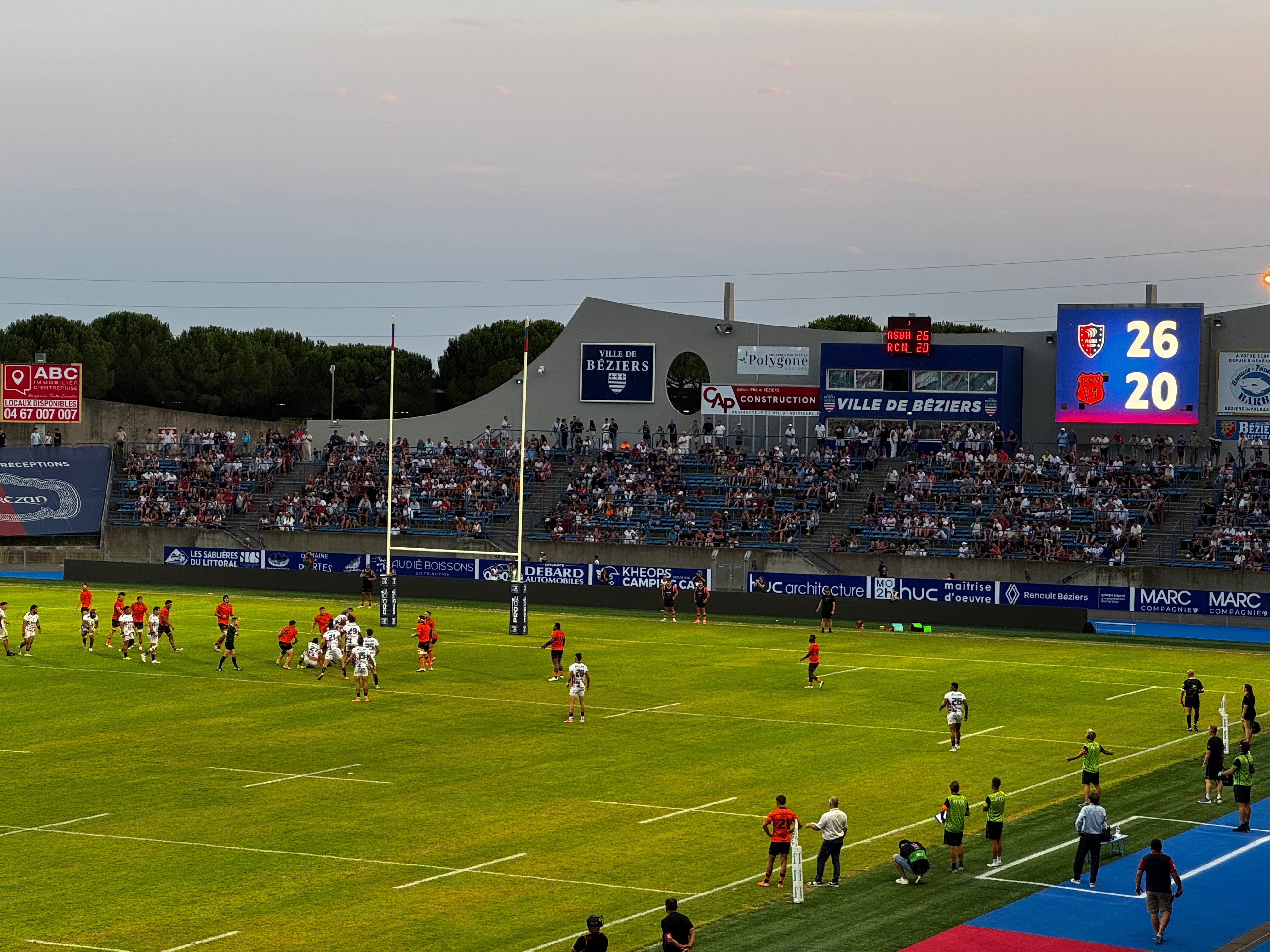
Imagine selecting a rugby team by identifying your most talented player and then finding fourteen more people exactly like them.
It would be ridiculous.
A prop isn’t supposed to play like a winger.
A scrum-half brings something different from a lock. A fly-half sees the game differently from a hooker. Each position requires different strengths, instincts and abilities.
The team works because they are different, not despite it.
And yet in organisations we can sometimes fall into the trap of surrounding ourselves with people who think like us, approach problems like us and possess many of the same strengths we do.
Perhaps it’s comfortable.
But I’m not convinced it creates the strongest teams.
The strongest teams I’ve experienced have contained people who could do things I couldn’t.
People who saw things I missed.
People who challenged my thinking.
People with expertise I didn’t possess.
People whose strengths compensated for my weaknesses — while, hopefully, mine did the same for theirs.
The job of a leader isn’t to be the strongest person in every position. It’s to build a team in which every position has strength.
But assembling the team is only the beginning
And that’s what brings me back to Béziers tonight.
Recruiting the right players isn’t enough.
You can have the perfect combination of individual strengths on paper and still not have a great team.
They have to learn one another.
Who makes the run without being asked?
Who stays calm when they’re under pressure?
Who needs encouragement after making a mistake?
Who challenges everyone else to raise their game?
Who speaks when everyone else goes quiet?
Who can be trusted when the carefully rehearsed plan falls apart?
Those things aren’t discovered on an organisational chart or a team sheet.
They’re discovered through experience.
There will be mistakes.
There will be misunderstandings.
There will probably be moments when things look considerably worse before they look better.
That’s part of becoming a team.
We expect polish when we should expect potential
Perhaps that’s the lesson I’m taking from tonight before the season has even properly started.
We can be too quick to judge beginnings.
A new leader.
A new employee.
A new team.
A new organisation.
Even ourselves when we step into something unfamiliar.
We expect polish when what we should expect is potential.
Nobody should judge Béziers’ season on one pre-season match.
This group needs time to discover not only what each individual can do, but what they can do together.
Leadership needs that same room to develop.
Teams need time to gel.
People need opportunities to discover what they’re capable of. And sometimes they need someone around them who sees what they might become before they’ve proved it themselves.
Years ago, Dieter could have looked at what I lacked and decided I wasn’t the right person to lead Agronomix.
Instead, we began a journey that ultimately lasted many years.
I never did become a plant breeder.
That wasn’t the point.
I learned to build a team containing people who knew things I didn’t, could do things I couldn’t, and brought strengths different from mine.
And perhaps that’s one of the most important lessons leadership has taught me:
You don’t build a great team by finding people without weaknesses.
You build one by bringing together people whose strengths make each other’s weaknesses matter less.
Tonight, Béziers are at the beginning of discovering what kind of team they might become.
And as I look around the pitch at all those new faces, I’m reminded that every great team, every great leader and every worthwhile journey has to start somewhere.
And so it begins.