

I’ve followed Formula One since my teenage years, and over that time I’ve become fascinated by the people who built the teams as well as by the drivers and their achievements. While the drivers naturally receive most of the attention, I’ve often found the stories behind the organisations themselves equally interesting. When I was studying entrepreneurship during my MBA, one individual particularly caught my attention: Bruce McLaren.
Today, McLaren is one of the most recognisable names in motorsport and the second most successful Formula One team by Constructors’ Championships. Yet behind that famous name is a story about considerably more than racing. It is a story of entrepreneurship, innovation, determination and, perhaps most importantly, leadership. Bruce McLaren was certainly an accomplished racing driver, but I would argue that his greatest achievement wasn’t winning races. It was building something capable of succeeding beyond himself.
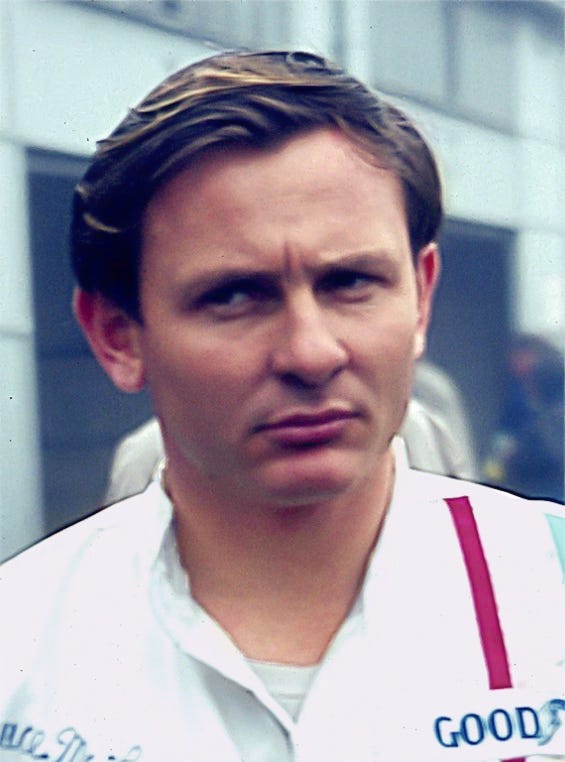
More Than a Racing Driver
Born in Auckland, New Zealand, in 1937, Bruce McLaren’s childhood was hardly the obvious beginning of a successful motorsport career. At nine years old, he developed Perthes disease, a condition affecting his hip that left him hospitalised for an extended period and with a permanent limp. Nevertheless, he developed the determination that would characterise his career (Fearnley, 2013; Allert, 2019).
His father operated a service station and workshop, giving Bruce an early introduction to engineering and mechanics. Motorsport became a passion, and his combination of driving ability and mechanical curiosity soon attracted attention. In 1958, he travelled to Britain through New Zealand’s Driver to Europe programme, and by 1959, aged just 22, he had won his first Formula One Grand Prix, becoming the youngest winner in the sport’s history at that time.
For many drivers, winning a Grand Prix would represent the fulfilment of a dream, but Bruce’s ambitions extended beyond his own racing career. In 1963, he established Bruce McLaren Motor Racing Ltd, initially competing in the Tasman Series before expanding into sports car racing and eventually Formula One in 1966. He was no longer simply driving someone else’s machinery; he was building his own organisation, taking on the responsibilities and risks that came with it (McLaren Racing, 2015a).
Entrepreneurship Is More Than Starting a Business
Establishing his own racing team was an ambitious decision, particularly for someone already enjoying considerable success as a driver. Bruce could have continued competing for established teams, but he saw an opportunity to build something of his own. His experience, engineering knowledge and relationships within motorsport provided a strong foundation, although there were no guarantees of success. Creating a racing organisation meant taking on financial responsibilities, employing people, developing competitive cars and establishing a reputation in an already demanding industry.
Peter Drucker (1985) argued that entrepreneurs identify opportunities created by change and seek ways to turn them into something valuable. Similarly, Bessant and Tidd (2019) describe entrepreneurship as a combination of vision, energy, commitment, judgement and risk-taking that drives innovation. Bruce’s decision reflected many of these characteristics, but what interests me most is how he translated his personal ambition into something others could share.
It’s relatively easy to have an idea, but turning that idea into a functioning organisation and sustaining it is another challenge entirely. A successful driver relies on a team, but a successful entrepreneur must also build one, recognising that their own abilities will never be sufficient to achieve everything they envisage. Bruce needed people who believed in what he was trying to achieve and possessed the skills to turn that vision into reality. His ability to bring those people together would become one of the defining characteristics of the organisation he created.
Building a Team, Not a Following
Entrepreneurs are often celebrated for their individual brilliance. We remember the founder, the inventor or the charismatic leader, yet behind most successful organisations is a group of people whose contributions are less widely recognised. Bruce understood that he couldn’t do everything himself and deliberately surrounded himself with talented individuals who shared his enthusiasm but brought complementary skills. People such as Teddy Mayer, Tyler Alexander and Wally Willmott became instrumental in the team’s early development, helping turn an ambitious idea into a competitive racing organisation.
What stands out is that Bruce appeared comfortable recognising his own limitations and trusting others to contribute their expertise. Former team member Gordon Coppuck recalled that Bruce was hands-on and understood what everyone was doing, while Howden Ganley described the remarkable atmosphere within the team and the willingness of those around him to follow his lead (Fearnley, 2013). These recollections suggest a leader who inspired commitment not simply through his achievements as a driver, but through his involvement with the people around him.
Kets de Vries (1985) explores how entrepreneurs can inspire others through enthusiasm and a shared sense of purpose, characteristics that seem particularly relevant to Bruce. However, enthusiasm alone is rarely enough to sustain a successful organisation; people also need to feel trusted, valued and empowered to contribute. I’ve come to believe that one of the most important responsibilities of leadership is not simply recognising what people can do today, but identifying what they might be capable of tomorrow. Bruce’s approach illustrates the difference between building a business around yourself and building an organisation with others, something that requires a degree of humility not always associated with the popular image of an entrepreneur.
Innovation Wasn’t a Department
Today, innovation is frequently treated as a separate business function, complete with strategies, budgets and management structures. For Bruce McLaren, however, innovation was simply part of everyday life. Motorsport provides an unforgiving environment where a successful design can become uncompetitive remarkably quickly, requiring engineers to continually question what works, what doesn’t and what might work better.
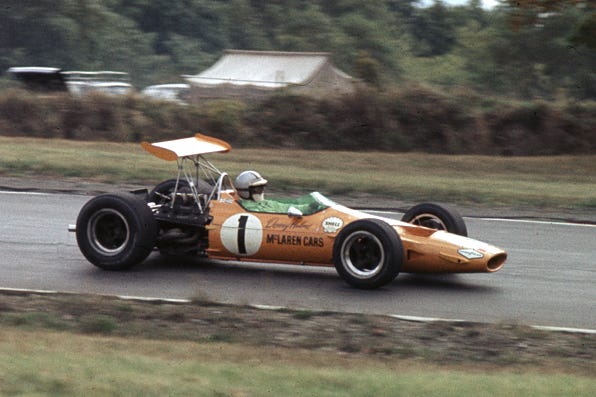
Bruce embraced that challenge, encouraging experimentation with aerodynamics, chassis design, weight reduction and mechanical performance. Not every improvement was revolutionary, but collectively they created competitive advantages. The McLaren M6A demonstrated what this approach could achieve when, in 1967, Bruce won the Canadian-American Challenge Cup (Can-Am) championship in a car developed by his own team. The following year, he won the Belgian Grand Prix at Spa-Francorchamps in the McLaren M7A, securing the team’s first Formula One World Championship victory.
These weren’t simply sporting achievements. They demonstrated that a relatively young organisation could compete against established competitors through engineering knowledge, collaboration and continuous improvement (McLaren Racing, 2018). There is an important entrepreneurial lesson here: innovation doesn’t always mean inventing something entirely new. Sometimes it means taking existing knowledge, questioning accepted practices and finding a better way forward. In Bruce’s case, that approach became embedded in the way the team operated rather than being confined to any single project.
Achievement, Risk and Ambition
McClelland’s Need for Achievement theory associates entrepreneurial tendencies with the motivation to overcome difficult challenges (Westhead and Wright, 2013). Few environments demonstrate this more visibly than motorsport, where success requires repeated effort, considerable investment and a willingness to accept failure. Even relatively small improvements may demand weeks of development, with no certainty that the result will justify the investment.
Bruce wasn’t immune to failure, nor was he always successful, but he continued developing, experimenting and pursuing opportunities. His second Can-Am championship in 1969 demonstrated the growing strength of the organisation he had created, although it would be a mistake to view his achievements solely through race victories. What made Bruce particularly interesting as an entrepreneur was that his ambitions extended beyond competition itself. He recognised that the engineering capabilities developed through racing might have commercial applications in an entirely different market.
A Vision Beyond the Racetrack
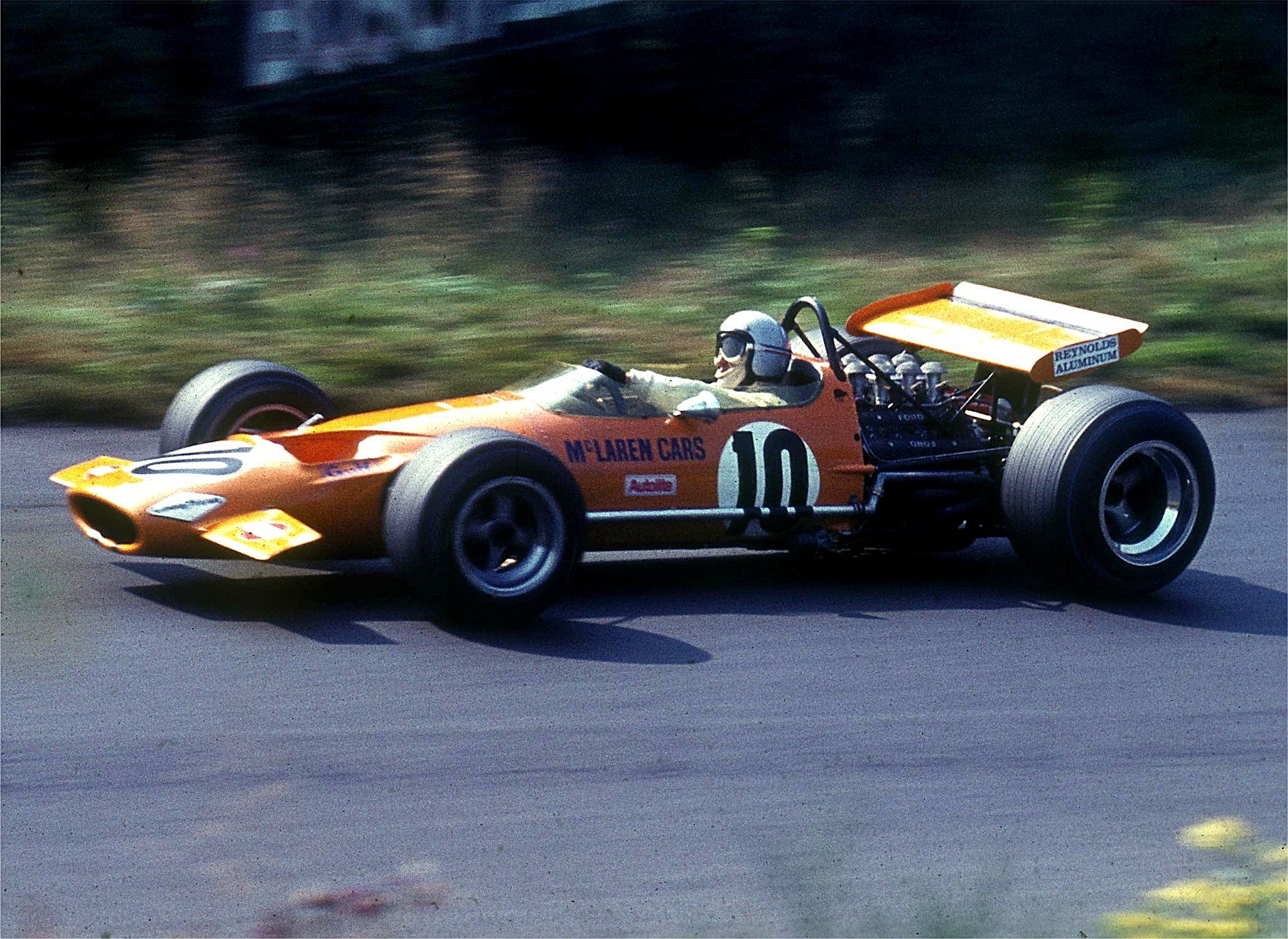
Bruce’s ambition to produce a road-going sports car offers perhaps the clearest insight into his entrepreneurial thinking. The McLaren M6GT emerged from the team’s racing expertise, combining lightweight construction with high-performance engineering. It represented an opportunity to apply skills and technology developed for competition to a product that could reach customers beyond the racetrack.
Bruce drove the prototype himself, using it on ordinary roads rather than simply displaying it as an engineering exercise. He envisaged producing exclusive sports cars that would translate the team’s racing knowledge into something commercially valuable (McLaren Racing, 2015b). Although the project never reached commercial production during his lifetime, that doesn’t diminish its significance. Here was an entrepreneur looking beyond his existing market and recognising that capabilities developed for one purpose could create opportunities elsewhere.
There is a distinction between being successful at something and recognising what that success might make possible. Bruce had already demonstrated his abilities as a driver, engineer and team leader, but the M6GT suggested an ambition to diversify the business beyond racing. Whether that venture would have achieved commercial success remains unknown, but the willingness to explore it reveals much about his entrepreneurial outlook.
A Legacy Beyond the Founder
On 2 June 1970, Bruce McLaren was killed while testing a Can-Am racing car at Goodwood, England. He was just 32 years old, and his death was a devastating loss for his family, colleagues and the motorsport community. In only seven years, he had established a racing organisation, developed competitive cars, won championships and laid the foundations for an ambitious road-car venture.
Yet perhaps his most significant achievement was less tangible. He had brought together people who shared his ambition, created an environment where innovation could flourish and established a culture in which individuals were encouraged to contribute their abilities. His accomplishments were remarkable in their own right, but the organisation he created was more than the product of one individual’s talent or determination.
Perhaps the greatest measure of an entrepreneur isn’t simply what they achieve personally, but what they enable others to achieve. Bruce had built a team with the knowledge, confidence and shared purpose to carry forward the work they had begun together, even though his own involvement ended far too soon. His story leaves me with a question worth considering for anyone building or leading an organisation:
Are we building something that depends upon us, or something capable of succeeding without us?
References
Allert, J. (2019). Formula One legend Bruce McLaren is a racing role model, but what can business leaders learn from his life story? City A.M., 15 March.
Bessant, J. and Tidd, J. (2019). Innovation and Entrepreneurship. 3rd ed. Wiley.
Drucker, P.F. (1985). Innovation and Entrepreneurship. Harper & Row.
Fearnley, P. (2013). ‘Bruce McLaren – The Genius Behind the Name’. Autosport, 213(10), pp. 14–17.
Kets de Vries, M.F.R. (1985). The Dark Side of Entrepreneurship. Harvard Business Review, November, pp. 160–167.
McLaren Racing (2015a). Bruce McLaren: The Birth of McLaren Racing. 4 June.
McLaren Racing (2015b). Bruce McLaren’s Dream: The McLaren M6BGT. 22 December.
McLaren Racing (2018). Putting McLaren on the Map.
McLaren Racing (2022). Bruce McLaren and the Cars That Made Him. 2 June.
Westhead, P. and Wright, M. (2013). Entrepreneurship: A Very Short Introduction. Oxford University Press.