

There’s been a bit of a break from rugby recently. I missed Béziers’ previous home match because I was in Barcelona for a concert (Transvision Vamp if you are interested), and then the team had a couple of weeks off. They played away last weekend, with a home match on Friday. Therefore my usual source of inspiration for Seeds of Leadership has been found elsewhere.
Fortunately, leadership lessons in my life don’t only appear in a grandstand, sometimes they turn up while walking the dogs.
We have two dogs, Noosa and and puppy Kelso. Kelso is now ten months old so I really should stop calling him a puppy, he’s an adolescent, and behaves like one! He’s curious, adventurous and becoming more confident about exploring the world around him.
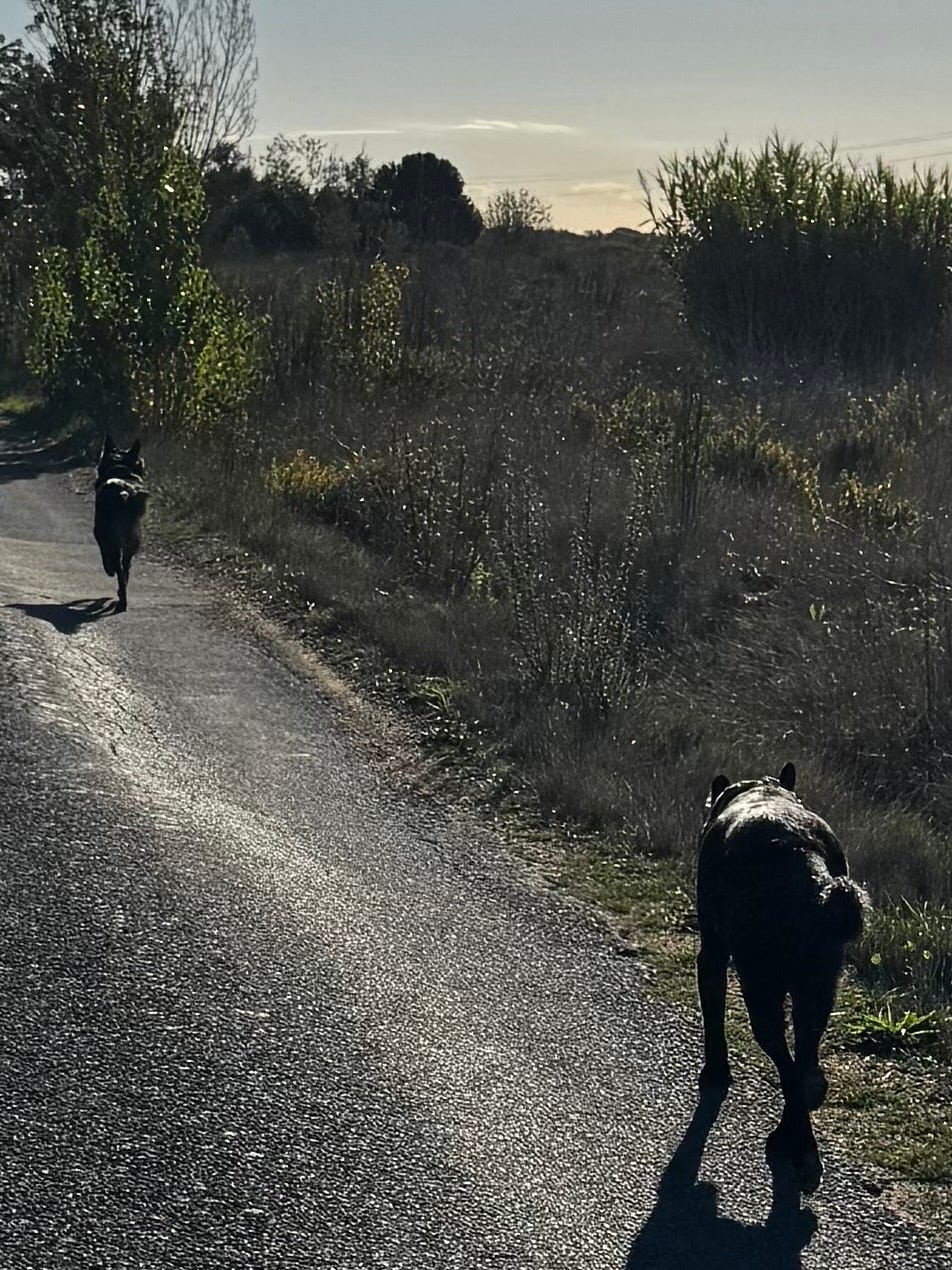
Out in front
We were out walking and Kelso took the lead. He’s often the first to head down the road or path, desperate to see what’s around the next corner. Noosa is generally more settled, while Kelso seems determined to discover everything as quickly as possible.
But today I noticed something about him.
Every so often, he’ll turn around and look back at me. Sometimes it’s just a quick glance before he carries on. Other times he’ll pause, almost as though he’s checking that I’m still there and that everything is okay.
I can’t know exactly what he’s thinking, of course, but I like to imagine he’s asking, “Am I doing okay? Are you still there? Am I still with my ‘people’?” (And in this moment I think he’s considering Noosa as one of his people).
And I find myself feeling rather proud of him.
He’s becoming more independent, gaining confidence and learning to explore without needing to be right beside me all the time. That’s exactly what I want to see. But I also want him to remain connected, to know where I am and to recognise when he’s gone far enough.
With hunting season having started here in southern France, I’m particularly conscious of that last point. I don’t always know what’s around the next corner, and I certainly don’t want him disappearing too far ahead.
So when he looks back, I’ll often give him a word of encouragement. If he’s getting too far away, I’ll ask him to sit and wait or call him back. And when he returns, there’s always a treat ready for him.
It’s reassuring for both of us. He knows I’m still there, and I know he is actually paying attention.
Watching him grow in confidence has made me think about something I’ve always valued in leadership: seeing other people become confident enough to step forward themselves.
Who needs to be at the front?
We have a tendency to associate leadership with being out in front. The leader is the person setting the direction, making the decisions and being seen. They’re the one everyone else follows.
And sometimes that’s exactly what leadership requires.
But I’ve never been entirely comfortable with the idea that the leader must always be the most visible person in the room. My natural preference has often been to work a little more in the background, helping others succeed rather than needing to be the face of everything myself.
During my years leading a software business, there were plenty of occasions when someone would bring a task or opportunity to me that I felt they were much better equipped to handle.
I might have had a reasonable understanding of the subject, perhaps even enough to do the work myself, but they had considerably more knowledge or experience. They understood the details, knew the audience or had relationships that made them the natural person to take it forward.
Sometimes I would think to myself, “But you’re better at this than I am. Why don’t you do it?”. Often I would say it to them.
It wasn’t an attempt to avoid responsibility. I remained accountable for the business and its direction. But I didn’t see much value in insisting that everything should come through me simply because I happened to be the person in charge.
In fact, I frequently thought the opposite. If someone had the expertise, the relationships and the ability to do something better than I could, surely it was in everyone’s best interest to create an opportunity for them to do it.
Being responsible for the direction doesn’t mean you have to be the person at the front of every initiative.

When encouragement goes both ways
There was another side to this, though, and it’s something I’ve reflected on since.
Occasionally, when colleagues encouraged me to take a more visible role, I initially interpreted it as a challenge to my leadership. I felt they were pushing me towards something that didn’t come naturally, perhaps questioning whether I was doing enough as the leader.
But when I stepped back and thought about it, I began to recognise that their intentions were positive.
They weren’t necessarily questioning my leadership at all. They were encouraging me to grow in it.
I wanted them to step forward because I recognised their knowledge, skills and abilities. They wanted me to step forward because they recognised that, as the leader, there were occasions when my voice and visibility mattered too.
We were both trying to encourage the other person, just from different perspectives.
And I think there’s something important in that.
Leadership development isn’t a one-way relationship in which the leader does all the encouraging and everyone else does the growing. The people around us can see things in us that we don’t always recognise ourselves. They can challenge our assumptions, encourage us beyond our natural preferences and help us become better leaders.
Sometimes the most useful thing a leader can do is encourage someone else to take the lead. At other times, the people around them may be right to say, “Actually, we need you out in front on this one.”
The challenge is having enough humility to recognise the difference.
Confidence without losing connection
I wrote recently about leadership succession in Stay Close Enough to Support, using a rugby pass as an illustration of what happens when responsibility moves from one person to another. That article was about handing over responsibility while remaining available to help.
This is a little different.
It’s about creating opportunities for others to take the initiative, even when the formal leadership responsibilities haven’t changed.
When I see Kelso running ahead on our walks, I’m not thinking about teaching him to be a leader in the human sense. He’s a young dog learning about his surroundings, and my responsibility is to look after him. People, of course, bring their own judgement, ambitions, expertise and independence to their work. The relationships are fundamentally different.
But watching his growing confidence has prompted me to reflect on the importance of giving people room to develop theirs.
In professional life, that means recognising when someone else is better placed to lead an initiative, trusting their expertise and resisting the temptation to become involved simply because you can. It also means remaining approachable, sharing context when it’s needed and recognising that encouragement can flow in both directions.
And perhaps most importantly, it means understanding that being out in front and being the leader aren’t necessarily the same thing.
A strong team doesn’t need everyone looking towards one person for every decision. It needs people who are confident enough to use their own abilities, willing to take responsibility and comfortable enough with one another to ask for help or offer a different perspective.
That’s not a weakness in leadership. I think it’s one of its strengths.
Leader of the pack
I suspect Kelso will continue to be the one racing ahead on our walks for some time yet. He’s young, enthusiastic and has a great deal of exploring to do. There will be occasions when I need to call him back, and others when I’ll simply enjoy watching him discover something new.
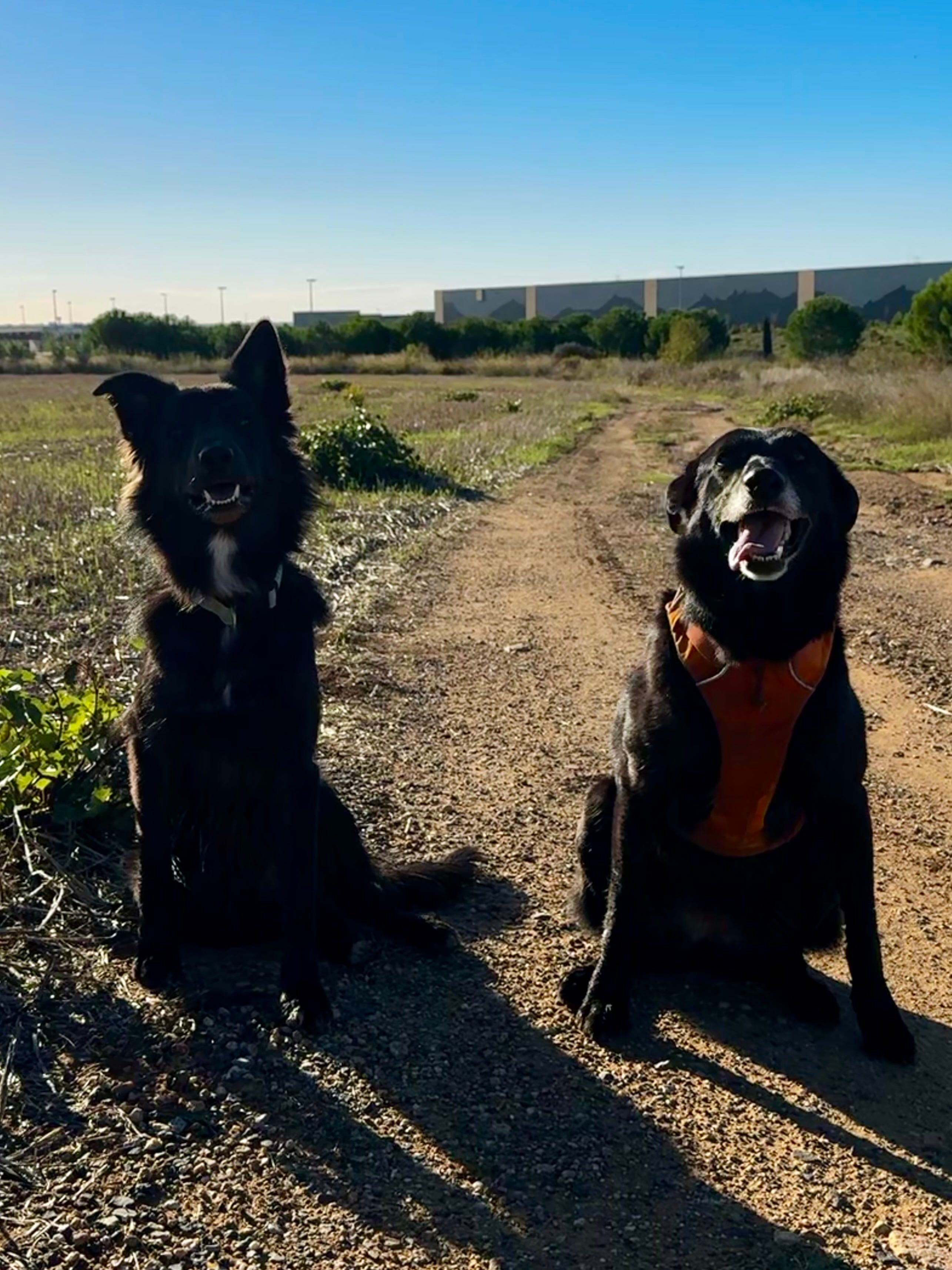
And every so often, he’ll turn around to check that I’m still there.
I rather like those moments. Not because I need him to keep looking back, but because I enjoy seeing his confidence grow while knowing we’re still connected.
It reminds me of the satisfaction I’ve found in watching colleagues develop, take ownership of something and achieve things that I might never have achieved in quite the same way myself.
It also reminds me that I haven’t always got the balance right. Sometimes I’ve needed to be more visible, to step forward when others were encouraging me to do so, rather than assuming that staying in the background was always the better approach.
Perhaps that’s what makes leadership interesting. It isn’t a fixed position at the front of the group. It’s an ongoing judgement about when to step forward, when to make room for someone else and when simply to be available.
The best leaders don’t always need to be out in front. Sometimes their greatest satisfaction comes from seeing someone else confidently take the lead.
And perhaps the question worth asking is this:
How do we recognise when it’s time to step forward ourselves, and when it’s time to encourage someone else to lead?